
When a business needs a system, not just a website
I’ve built more than 150 websites since 2016, and most businesses that ask me for help need exactly that: a clear, fast site that makes it easy to get in touch. I say so on the first call, because it’s cheaper for them and it’s the truth.
Some businesses need something else. A website tells people about the business. A system runs part of it. It holds information that changes every day, and people on the team act on that information. Size and budget don’t decide which one you need. What decides it is what the software has to do on an ordinary Tuesday.
Here are the signs I look for, each taken from a system I’ve built.
1. You copy the same information between two tools
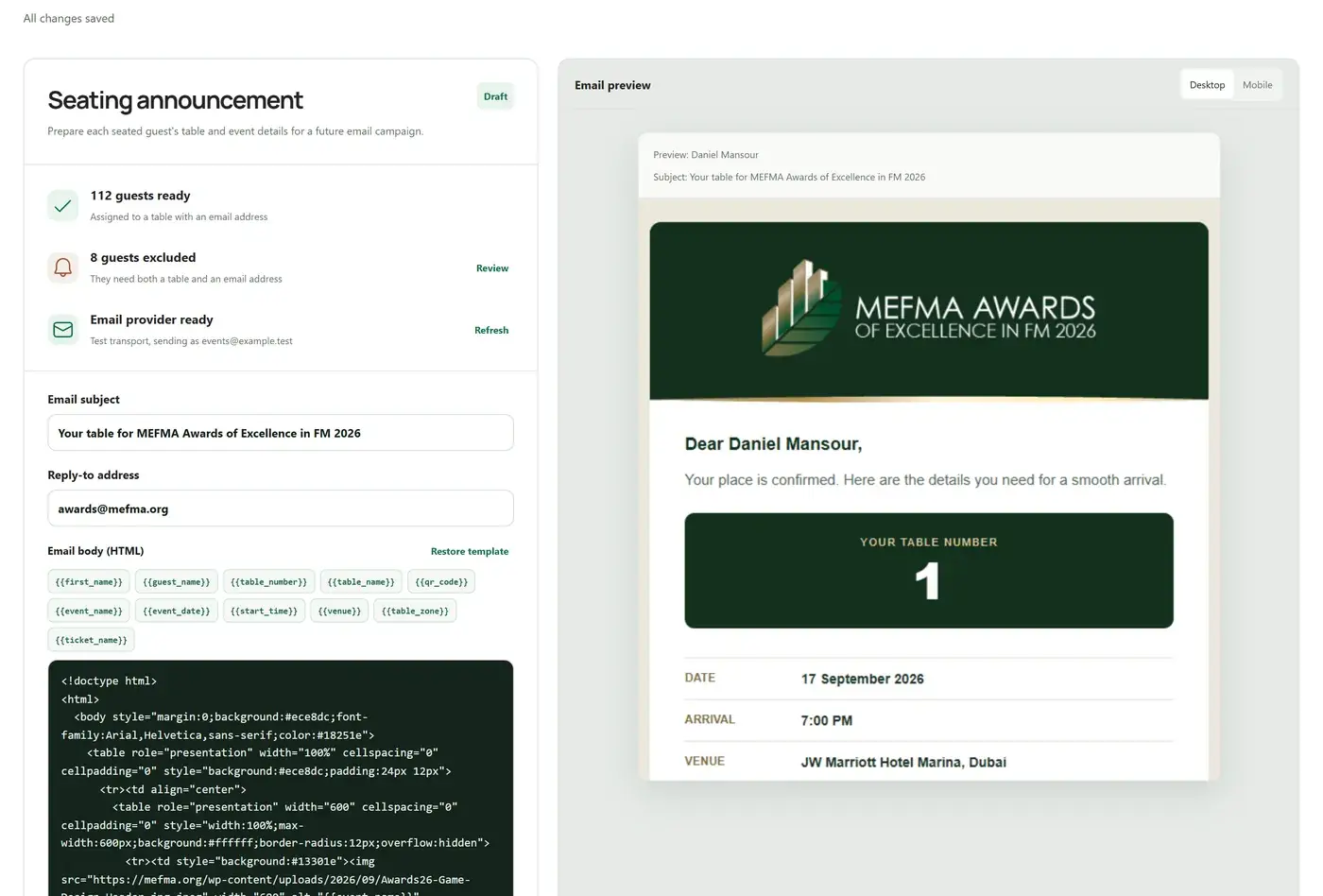
MEFMA, the Middle East Facility Management Association, sells gala tickets through its WordPress site. Seating those guests is a separate job. Without a link between the two, every change to a booking has to be carried across by hand, and two copies of a guest list will always drift apart.
The seating app I built for them pulls paid, confirmed bookings straight from the booking system with one sync button. Names and emails that change in a booking update in the seating plan. A guest who’s already seated keeps their table. The table email, the QR code and the door check-in all read from that one list.
If someone on your team spends part of each week retyping or reconciling, that’s the first sign.
2. Different people need different views of the same thing
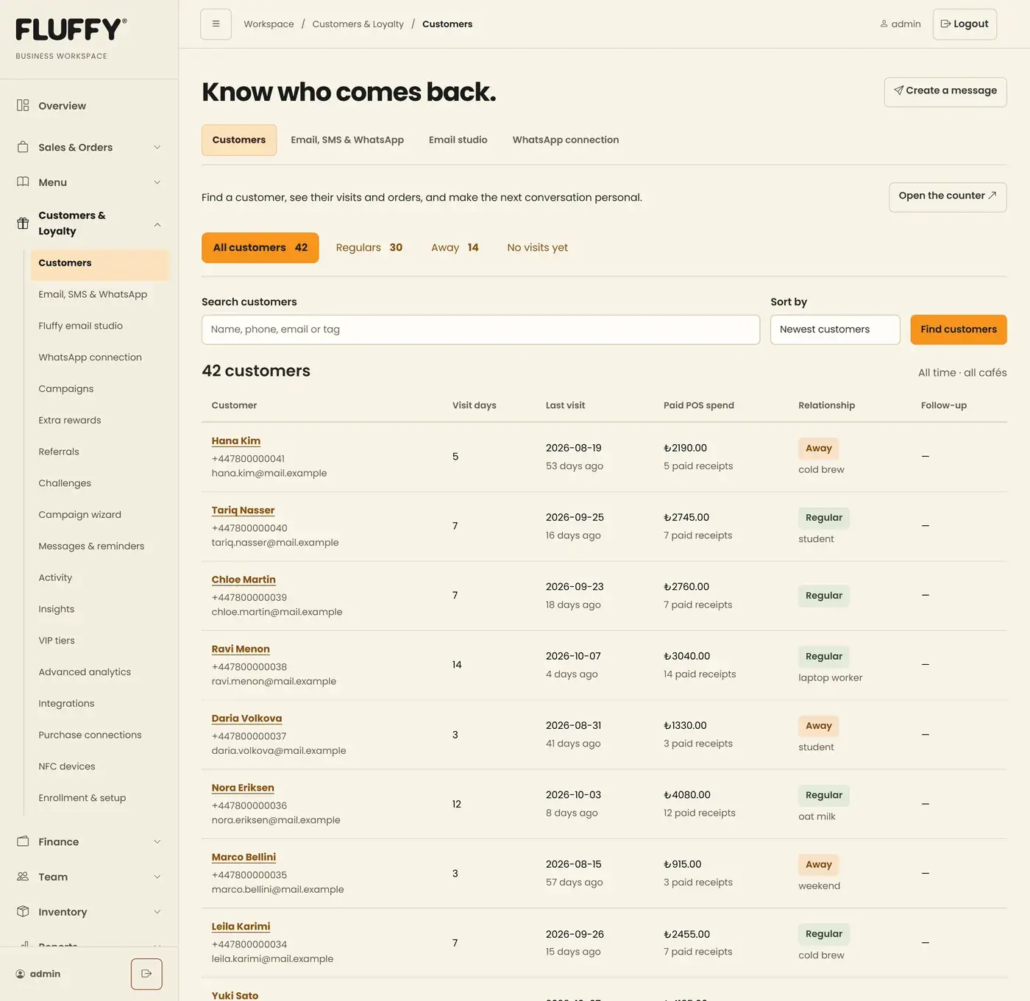
Fluffy is a cheesecake café in Istanbul with two branches. The owner needs to see the whole business: sales, costs, staff and customers, by branch or combined. A barista needs to scan a loyalty card and add a stamp, and nothing else. In the workspace I built for them, staff get a simpler home with only the actions they’re allowed, and branch permissions are enforced on the server as well as in the menus.
A website shows everyone the same page. When you need roles, permissions and a history of who did what, you’re past a website.
3. Money or points move, and mistakes must be reversible
Dr. Ehab Hamarneh’s coaching academy sells through sales agents in several countries. I built them an Arabic order portal where each agent records orders on top of WooCommerce, which stays the only order database. Agent commission is calculated on the cash actually received, after refunds. If the cash recorded is more than 2% away from the invoice, the agent has to write a reason, and that reason goes into the export. Agents can correct a receipt for 7 days after payment, and every correction is logged with the old and new amount.
Fluffy’s loyalty stamps work on the same principle. A stamp can be reversed, but only with a reason, and both entries stay in the history.
When money, commissions or reward points change hands, you need records that can be corrected without being erased. A form that sends an email can’t do that.
4. Your inbox has become a workflow
The same academy handles customer support by email, so I built them a help desk with routing, categories and a knowledge base. Some of the most useful fixes were small. The website contact form was sending messages from the academy’s own address with the customer’s email buried in the body, so a support agent who clicked Reply was writing back to the academy itself. The desk now reads the customer’s real address from the message. Tickets that arrive on a weekend or public holiday get an automatic reply saying when the team is back. Newsletters that land in the support inbox are closed and tagged instead of piling up as open tickets.
If your team says “check the inbox” when they mean “find out what’s going on”, that’s a sign.
5. Many people show up at the same moment
A website can usually cope with a busy day. A live game where hundreds of guests press a button in the same second is different. For MEFMA’s awards night I built a prediction game for about 500 guests and load-tested it with 1,000 simulated players before trusting it with the room.
If your business has a rush moment (a ticket release, a live session, a sale at a fixed time) and something has to be counted correctly during it, you need more than a page.
When a website is the right answer
Falcon Syria needed a catalogue: 36 flavours in English and Arabic, 80 pages generated by a custom static build, with an age gate. That’s a website, and a fast one. The only system-like part was a protected form for wholesale enquiries and a small CRM for reseller applications. Everything else is pages people read.
If the job is to be found, explain what you do and get a message, a website is the right tool. A system you don’t need still has to be maintained.
How systems usually start
Often the website comes first and the system grows next to it. For Fluffy, I started with the website, a QR menu and a staff attendance system, and the workspace came later. For Dr. Ehab, the public site sits in front of a live-session portal, a help desk and an agent order portal, each added for a specific job. In both cases the new parts were built around what was already working, like WordPress and WooCommerce, instead of replacing it.
A system also needs looking after. It has tests, it gets updates, and someone has to answer when it misbehaves. When I build one, I write a short spec first that you can read and change, you see a demo every week, and I support it after launch.
Where to start
Pick the one task that eats the most time or causes the most mistakes in your week. Describe it the way you’d describe it to a new employee. That description is usually the first page of a spec.
If you’re not sure whether you need a system or a better website, send me a WhatsApp message and describe how a normal day works. I’ll tell you which one I think you need, even if it’s the smaller one.
Related work: Selected work
